
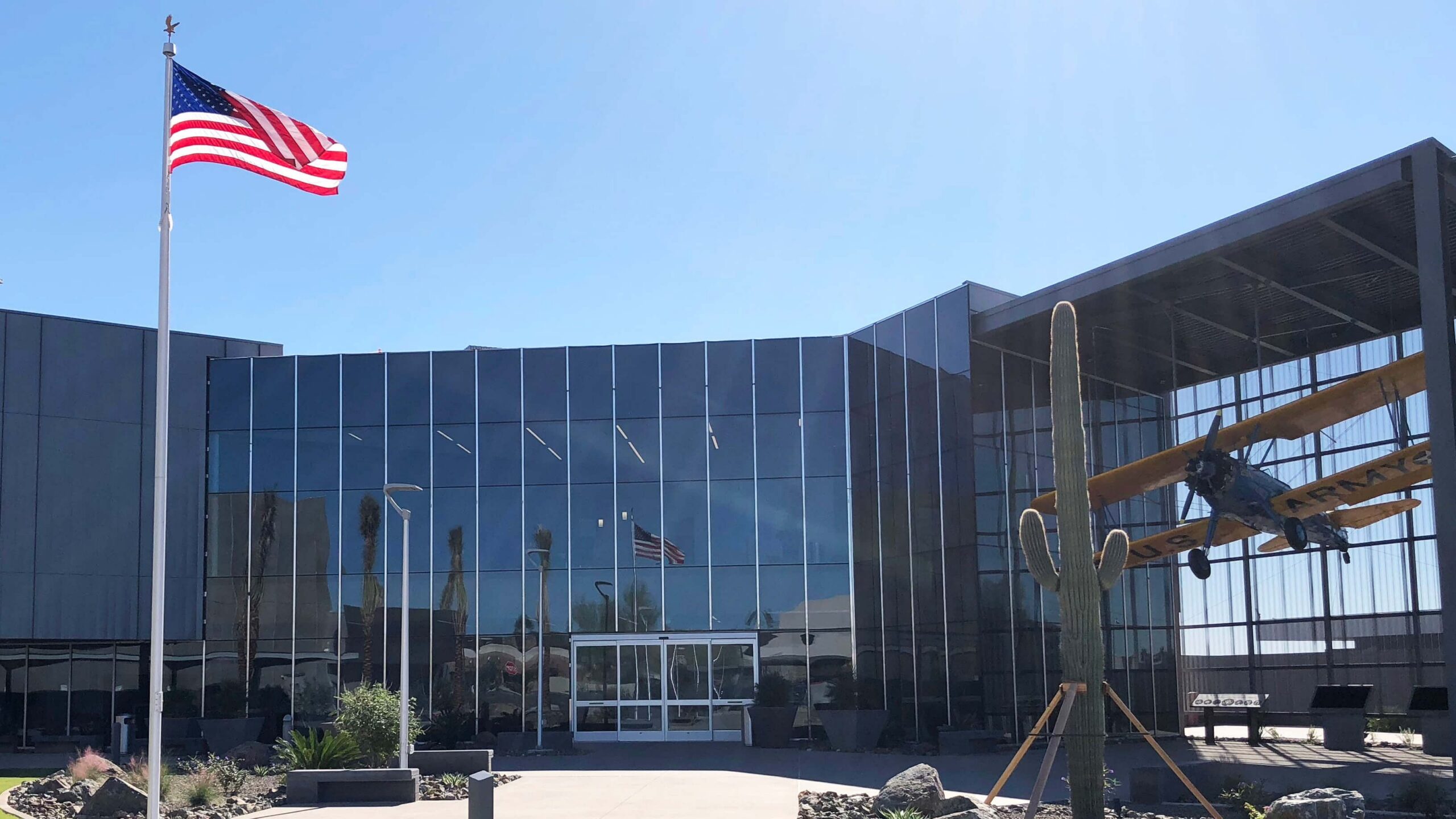
Scottsdale Airport (KSDL) is one of the busiest single-runway general aviation airports in the country — home to well over a hundred based jets alongside turboprops, pistons, and helicopters, with a steady stream of business-aviation traffic moving in and out of the Valley every day. If you base or operate an aircraft here, you already know how busy the ramp stays. What’s easy to underestimate is how quickly the desert environment works against your paint, your glass, and your interior. Keeping an aircraft clean at KSDL isn’t about vanity — it’s routine protection for one of the most valuable assets you own.
A hub for business aviation
Scottsdale sits at the heart of one of the most active business-aviation communities in the Southwest. Between the fixed-base operators on the field, the private hangars scattered throughout the Scottsdale Airpark, and the tie-downs out on the ramp, KSDL is home to everything from light and midsize jets to turboprops and owner-flown pistons. That diversity matters when it comes to detailing. A Phenom or Citation coming off back-to-back charter legs has very different needs than a Bonanza that flies a few weekends a month, and a turbine that lives outside collects contaminants far faster than one tucked into a climate-controlled hangar. There’s no single “right” detailing plan for the field — only the right plan for your aircraft and how you fly it.
Why the desert is especially hard on your aircraft
Arizona’s climate is tough on aircraft in ways that aren’t always obvious until the damage is already done. Intense, year-round UV breaks down paint and clear coats, fading and chalking the finish over time. Fine airborne dust — kicked up constantly and driven hard during monsoon season — settles into every seam, gear well, and control-surface gap, and behaves like a mild abrasive any time it’s wiped the wrong way. Add the daily temperature swings and the occasional dust storm, and you have an environment that quietly ages an airframe faster than a milder climate would.
The consequences show up as oxidized, chalky paint, hazed and streaked windows, dried and cracking leather, and corrosion starting in the places you can’t easily see. The good news is that nearly all of it is preventable with consistent care and the right protection:
- Regular exterior washes to lift corrosive contaminants before they bond to the paint
- Ceramic coating, wax, or polymer protection to shield the finish from UV and dust
- Interior detailing to keep cabin leather, plastics, and panels from drying out in the heat
- Window polishing to keep transparencies clear and free of the fine scratching desert grit causes
What detailing at KSDL actually involves
Every service we offer is available right on the field at Scottsdale, and most owners use some combination depending on their aircraft and schedule. A thorough exterior detail handles the wash, decontamination, and finish work that keeps paint bright between trips. For longer-term protection, ceramic coating lays down a durable, high-gloss barrier against UV and contaminants, while wax and polymer protection offer more affordable, shorter-interval alternatives — three genuinely different products for three different budgets and timelines. Inside, interior detailing restores and protects the cabin. Brightwork polishing brings unpainted metal back to a mirror finish, and window polishing clears hazing from the transparencies. Owners who’d rather set it and forget it can fold everything into a recurring maintenance plan so the aircraft simply stays ready.
How often should you detail your aircraft?
There’s no universal answer — it depends on how much you fly, where the aircraft is stored, and the finish you’re protecting. As a rough guide for a Scottsdale-based aircraft: a quick exterior wash every few weeks keeps contaminants from bonding; a full exterior detail every one to three months maintains the finish; interior detailing a few times a year keeps the cabin fresh; and a protective coating — ceramic, polymer, or wax — reapplied on its own schedule keeps a barrier between your paint and the desert. Aircraft that live outside on tie-downs need attention more often than hangared ones. For most owners, the simplest approach is a recurring plan built around their flying, so nothing slips through the cracks.
Mobile detailing, right on the field
The biggest advantage for KSDL owners is that there’s no repositioning and no lost flying time. We bring everything to your aircraft — whether it’s parked at an FBO, tucked into an Airpark hangar, or sitting out on the ramp — and work around your schedule, 24/7 by appointment. Your aircraft never has to leave Scottsdale, and it comes back cleaned, protected, and flight-ready. For based owners and transient crews alike, that convenience is often the difference between detailing that actually happens on schedule and detailing that keeps getting pushed to “next trip.”
Frequently asked questions
How often should I detail my aircraft in the Arizona desert?
It depends on usage and storage, but a good baseline is a light exterior wash every few weeks, a full exterior detail every one to three months, and interior detailing a few times a year. Aircraft kept outside need more frequent care than hangared ones, and a recurring plan is the easiest way to stay ahead of the desert.
Do you come to my aircraft at Scottsdale Airport?
Yes. We’re fully mobile and detail your aircraft wherever it’s parked at KSDL — at an FBO, in a private Airpark hangar, or on a tie-down out on the ramp. There’s no need to reposition the aircraft or bring it anywhere.
What’s the difference between wax, polymer, and ceramic protection?
They’re three separate products with different lifespans and price points. Wax is the most affordable and shortest-lasting; polymer sealants last longer than wax; and ceramic coating offers the most durable, longest-lasting protection and gloss. We’ll recommend the right one based on how your aircraft is stored and flown.
Is ceramic coating worth it for a desert-based aircraft?
For many Scottsdale owners, yes. Ceramic coating provides the strongest defense against the UV and dust that age desert aircraft fastest, and it makes routine washing easier and more effective. It’s a bigger upfront investment than wax, but it lasts far longer.
How long does an aircraft detail take?
It varies with the size of the aircraft and the services chosen — a straightforward exterior wash is relatively quick, while full detailing with a ceramic coating takes considerably longer. We’ll give you a clear time estimate with your quote and work around your flying schedule.
Ready to protect your aircraft? See everything we offer on the field on our Scottsdale Airport service page, or get a quote and we’ll build a detailing plan around your aircraft and how you fly.