
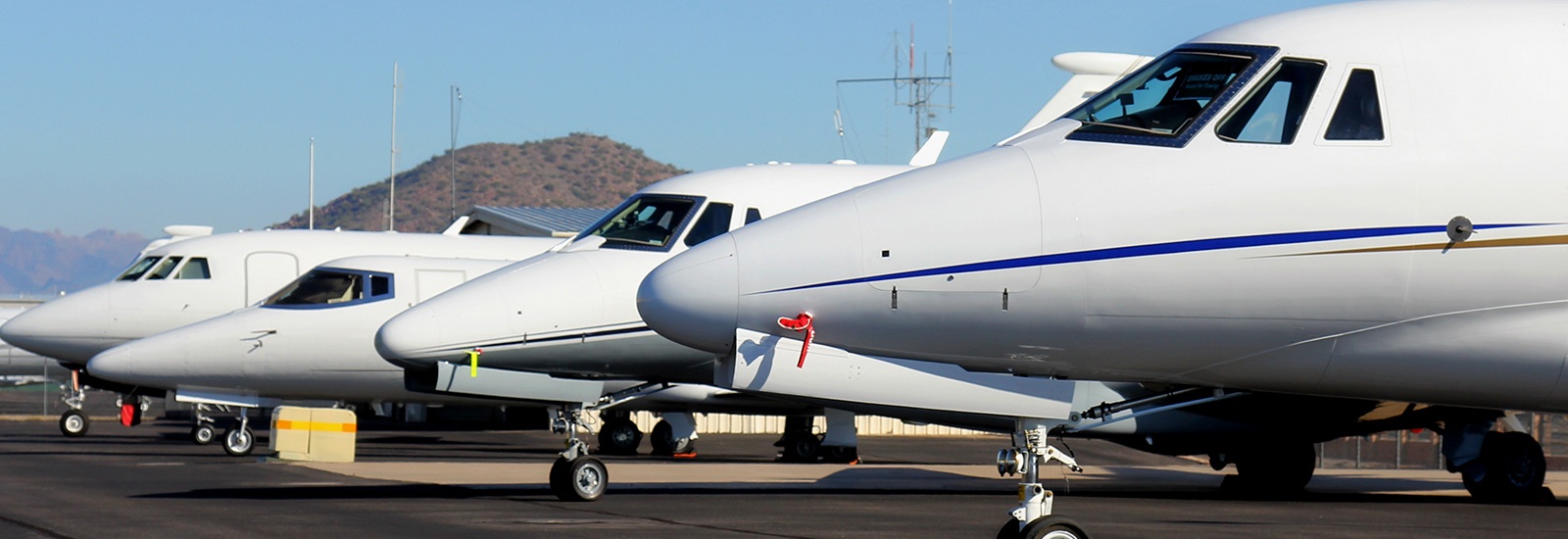
Phoenix Deer Valley Airport (KDVT) is one of the busiest general aviation airports in the world — home to more than 900 based aircraft and hundreds of operations on a typical day. It’s a training powerhouse and a home field for private owners at the same time, which means the aircraft here work hard and rack up cycles fast. If you base an aircraft at KDVT, or you run a fleet out of it, keeping those airframes clean isn’t cosmetic housekeeping — it’s part of protecting your equipment and your resale value in a demanding desert environment.
One of the busiest GA fields in the world
Deer Valley’s traffic runs the full spectrum. Piston trainers fly pattern after pattern all day, gliders and light sport aircraft share the ramp with turboprops and jets, and a large base of owner-flown aircraft rounds out the mix. That volume is great for building flight hours and running a busy flight line, but it also means contaminants pile up quickly — and at very different rates depending on how each aircraft is used. A trainer flying six times a day accumulates bug strikes, exhaust soot, brake dust, and ramp grime far faster than a privately owned aircraft that flies a couple of weekends a month. There’s no single detailing schedule that fits every aircraft on the field; there’s only the right plan for how each one flies.
What heavy use does to an aircraft in the desert
High utilization and Arizona’s climate are a tough combination. Every flight lays down a fresh coat of insects and combustion byproducts, and if they aren’t removed they bake onto the paint under the desert sun and become genuinely corrosive. Fine airborne dust — constant here, and driven hard during monsoon season — settles into seams, gear wells, and control-surface gaps, and acts like a mild abrasive whenever a surface is wiped the wrong way. Add relentless UV that fades and chalks paint over time, and a high-cycle aircraft can look tired and lose value quickly if it isn’t cared for. The defense is consistent cleaning and the right protection:
- Exterior washes that lift contaminants before they bond and etch the finish
- Ceramic coating, wax, or polymer protection for long-term UV and dust defense
- Window polishing to keep transparencies clear and inspection-ready
- Interior detailing to protect cabins that see constant use and desert heat
What detailing at KDVT actually involves
Every service we offer is available right on the field at Deer Valley, and owners typically mix and match based on their aircraft and how hard it flies. A thorough exterior detail keeps paint bright between flights. For durable protection, ceramic coating lays down the longest-lasting barrier against UV and contaminants, while wax and polymer protection are more affordable, shorter-interval options — three separate products for three different budgets and timelines. Inside, interior detailing keeps hard-used cabins fresh. Brightwork polishing restores unpainted metal, and window polishing clears the hazing that desert grit causes. For flight schools and busy owners alike, a recurring maintenance plan is often the simplest answer — the aircraft just stays ready.
How often should a high-use aircraft be detailed?
It comes down to cycles and storage. A hard-flown trainer benefits from frequent light exterior washes — as often as every week or two — to keep bug and exhaust residue from bonding, plus a full exterior detail on a regular cadence and interior detailing several times a year. A privately owned aircraft that flies less can stretch those intervals. In every case, a protective coating reapplied on its own schedule keeps a barrier between the paint and the desert. The busiest operators usually find that a standing plan built around their flight schedule is the only way to keep detailing from slipping when the flight line gets hectic.
Mobile detailing, right on the field
The biggest advantage for KDVT operators is that there’s no repositioning and no lost flight time. We bring everything to your aircraft — at an FBO, in a private hangar, or on a tie-down out on the ramp — and work around your schedule, 24/7 by appointment. For a flight school, that means fleet aircraft get detailed between rotations without ever leaving the line. For a private owner, it means your aircraft is ready whenever you are, without a trip somewhere else to get it cleaned.
Frequently asked questions
How often should a flight-school or high-use aircraft be detailed?
Hard-flown aircraft benefit from a light exterior wash every week or two to keep bug and exhaust residue from bonding, a full exterior detail on a regular cadence, and interior detailing several times a year. Privately owned aircraft that fly less often can stretch those intervals. A recurring plan is the easiest way to keep it consistent.
Do you detail aircraft on the ramp or in hangars at Deer Valley?
Both. We’re fully mobile and come to your aircraft wherever it’s parked at KDVT — at an FBO, in a private hangar, or on a tie-down out on the ramp. There’s no need to reposition it.
Can you handle a whole training fleet?
Yes. We work with flight schools and operators to detail multiple aircraft on a recurring schedule that fits around your flight line, so the fleet stays presentable without disrupting operations.
Does regular detailing really affect resale value?
It does. Protected, well-maintained paint and a clean interior make a strong impression on buyers and hold value noticeably better than an aircraft that’s been baked and neglected in the Arizona sun. Consistent care is one of the simplest ways to protect what your aircraft is worth.
What’s the difference between wax, polymer, and ceramic protection?
They’re three separate products with different lifespans and price points. Wax is the most affordable and shortest-lasting; polymer sealants last longer than wax; and ceramic coating offers the most durable, longest-lasting protection and gloss. We’ll recommend the right one based on how your aircraft is stored and flown.
Ready to set up detailing at Deer Valley? See everything we offer on the field on our Deer Valley Airport service page, or request a quote for your aircraft or fleet.